Are Mediation Agreements Legally Binding?
Family mediation is a highly successful approach for couples going through a separation or a divorce, providing a constructive environment to resolve disputes without going to court. With the guidance of a neutral mediator, parties can negotiate child arrangements and financial settlements in a way that best suits their needs. The national average for success through mediation is 73% of cases reaching agreement. This figure rises to 90% for Mediate UK’s clients. But, are Mediation Agreements Legally Binding?
Three key types of mediated agreements often arise during this process:
- Parenting Plan (Child Arrangements)
- Memorandum of Understanding (MOU)
- Open Financial Statement (OFS)
Each document plays an important role, especially in managing child arrangements and financial matters. However, these agreements are not legally binding in their own right. This blog will explore how they function and how you can make them enforceable through the court system, focusing on Child Arrangement Orders, Financial Consent Orders, and Settlement Deeds for unmarried couples.
Parenting Plan (Child Arrangements)
What is a Parenting Plan?
 A Parenting Plan is a written document that outlines how separated or divorced parents will manage their responsibilities for their children. It typically includes:
- Living arrangements for the child(ren)
- Monthly or Weekly schedules, including holidays and special occasions
- Decisions around education, healthcare, and other important matters
- Guidelines for communication between parents and with the child(ren)
Benefits of a Parenting Plan
- Personalised – Tailored to fit the specific needs of your family.
- Reduces Conflict – Facilitates cooperation and minimises misunderstandings.
- Provides Clarity – Sets clear expectations, helping to avoid future disputes.
How to Make It Legally Binding – Child Arrangement Orders
While a Parenting Plan offers a clear framework for co-parenting, it is not legally binding on its own. To ensure that both parents adhere to the agreed terms, you can apply to the court for a Child Arrangement Order. This court order formalises the Parenting Plan, making it legally enforceable. It is worth noting that a court will only make a parenting plan legally binding if they agree it sin the child’s best interest to do so. In addition to this, both parents (and anyone else with parental responsibility) will need to attend the court to explain this to the judge and answer any questions. Cafcass are likely to be involved as well and may want to talk to your child(ren). In this respect, a child arrangement order is very much different a financial order.
Memorandum of Understanding (MOU) and Open Financial Statement (OFS)
What Are an MOU and OFS?
The Memorandum of Understanding (MOU) and the Open Financial Statement (OFS) work hand-in-hand in the mediation process:
- OFS (Open Financial Statement) – The Open Financial Statement is a comprehensive disclosure of both parties’ financial circumstances, including assets, liabilities, income,and expenses. It ensures transparency and forms the basis of any financial agreement.
- MOU (The Narrative Document) – This document captures the discussions and agreements made during mediation. It provides a narrative that details how financial and child arrangements will work, summarising the agreed terms in a clear, structured manner.
Benefits of MOU and OFS
- Clarity and Transparency – Together, they provide a full picture of the financial landscape and the terms agreed upon.
- Structured Decision Making – The MOU outlines the decisions made, while the OFS backs those decisions with the detailed financial data.
- Foundation for Legal Agreements – These documents are used when drafting legally binding financial agreements.
How to Make Them Legally Binding – Financial Consent Orders
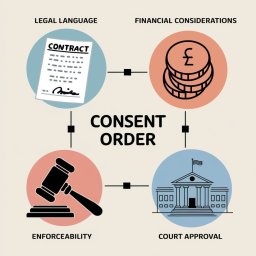
On their own, the MOU and OFS are not legally binding, although the OFS can be used in court as a disclosure. To formalise these agreements, the information from both documents is used to draft a Financial Consent Order. This order is then submitted to the court, along with a Form D81, where a judge reviews it to ensure fairness and compliance with legal standards. Once approved, the Financial Consent Order becomes a legally binding document, providing enforceability to the agreements reached during mediation.
GET IN TOUCH TO FIND OUT HOW MEDIATE UK CAN HELP WITH YOUR PARENTING OR FINANCIAL DISPUTE, OR WITH A DIVORCE OR SEPARATION.
CALL 0330 999 0959 OR CLICK HERE FOR A FREE 15-MINUTE CONSULTATION
Separation Agreements – For when you do not want to divorce now
 Separation Agreements have become less popular with the implementation of the no fault divorce law. This is because couples wishing to get divorce no longer need to wait two years of living separately in order to seek a divorce without apportioning blame. However there may be some married couples who for religious, financial or personal reasons do not want to get divorced at this time, but do want their financial agreement recorded now. This is where a separation agreement can be helpful.
A separation agreement only invites the court to accept your financial arrangements, as agreed now at the time you later get a divorce. You should both complete a full financial disclosure, take legal advice and confirm you are not entering into the agreement under duress. If these three apply, a court is more likely to enforce the separation agreement when you do get a divorce and finalise matters into a financial consent order.
It can be a complicated area of law, and from a legal perspective, it can make more sense to divorce now if you know that the relationship is not recoverable. This is because you can achieve a clean break financial order without the need for further legal involvement at a later time, when your needs may have changed.
Making Agreements Legally Binding for Unmarried Couples – Settlement Deed.
For unmarried couples, particularly those who cannot apply for a Financial Consent Order, a Settlement Deed (or Separation Agreement) serves as an alternative. This document outlines how shared assets, finances and interim financial responsibilities will be agreed.
Benefits of a Separation Deed
- Structured Agreement – Outlines clear terms for financial arrangements.
- Legal Weight – Though not as enforceable as a court order, it can be upheld in court if both parties have independent legal advice and made full financial disclosure of all shared assets.
- Flexibility – Offers an agreed framework without needing immediate court involvement.
As a contract, a settlement deed can be enforced through civil law, as with other legal contracts.
Summary
Mediated agreements provide a framework for couples to move forward amicably and with clarity. They provide a constructive way to resolve disputes without court intervention. However, ensuring these agreements are enforceable requires formalising them through the courts.
Just to recap:
- Parenting Plans can be made binding through Child Arrangement Orders. You both need to attend court and a show having such an order is in the child’s best interests.
- MOUs and OFS together form the basis for Financial Consent Orders. You do not need to attend court for this, but can only be given on a divorce.
- Settlement Deed offers a legally recognised contract for unmarried couples. You do not need to attend court for this.