Can I Get a Consent Order After a Divorce?

When getting divorced, it’s important to consider not just the emotional aspect, but also the legal and financial implications. One key element in finalising your financial matters is a consent order, which legally formalises any financial agreements made during or after your divorce. But what if you didn’t obtain a consent order at the time of your divorce? Is it still possible to secure one?
Let’s explore how you can obtain a consent order post-divorce and how family mediation can assist in resolving financial issues.
What is a Consent Order?
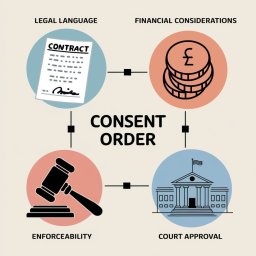
A consent order is a legal document that confirms any financial agreement reached between you and your ex-spouse. This could cover the division of assets, spousal or child maintenance, and pensions. Once a court approves the consent order, it becomes legally binding, ensuring both parties adhere to its terms.
Importantly, a consent order offers finality and ongoing protection from future claims on your assets. Without one, even years after your divorce, your ex-spouse may still make a financial claim against you.
Why Might Someone Not Get a Consent Order During Divorce?
There are several reasons why couples may not finalise a consent order during their divorce. Here are some common scenarios:
-
Informal Agreements
Some couples believe that an informal agreement is enough, trusting that both parties will stick to it without needing a formal document. However, this can lead to complications later.
For example, John and Sarah agree to split their finances informally, with John moving out and keeping his savings while Sarah keeps the house. Years later, Sarah inherits a large sum of money, and John attempts to claim a share. Without a consent order in place, he could legally pursue a portion of her assets.
-
Focusing Solely on the Divorce
Often, couples are so focused on finalising the divorce that they postpone financial decisions. This can leave unresolved matters hanging, leading to disputes later on.
For example, Emma and Mark finalise their divorce but delay discussions about their pensions. Without a consent order, Emma later realises she has no legal certainty about her share of Mark’s pension.
-
Ongoing Financial Disputes
If financial disputes aren’t resolved during the divorce process, couples may delay formalising their agreement, hoping to sort things out later. Unfortunately, this can lead to even more complications down the road.
For instance, Julie and Paul disagree on how to divide their joint property and delay the financial settlement. A year later, tensions have increased, and their needs have changed as Paul is living with a new partner who has young children, making the situation more difficult to resolve.
How Family Mediation Can Help
If you haven’t yet reached a financial agreement with your ex-spouse, family mediation can be a helpful step. A trained, impartial mediator helps both parties communicate and reach a mutually acceptable agreement without needing to go to court.
In England and Wales, courts require couples to attempt mediation before applying for legal financial orders in most cases. You can use this calculator to see if the court would require you to attend family mediation before making an application.
Family mediation can offer several benefits, including:
- Open Communication – It encourages both parties to openly discuss their financial needs and concerns, helping to resolve disputes blocked by emotions.
- Cost-Effective – Mediation is often less expensive and quicker than court proceedings, saving both time and money.
- Tailored Solutions – Mediation offers flexibility, allowing you to create an agreement that suits both parties’ circumstances better than a court-imposed solution.
Once an agreement is reached through mediation, it can be turned into a legally binding consent order by a solicitor. Mediate UK offers a fixed-fee consent order service to help you with this.
How to Obtain a Consent Order After Divorce
If you didn’t get a consent order at the time of your divorce, it’s still possible to apply for one later. Here’s how the process works:
- Agree on Financial Terms – First, both parties must agree on the financial settlement, which can cover assets, maintenance, and pensions. If there are unresolved disputes, mediation can help.
- Draft the Consent Order – Once an agreement is reached, a solicitor can draft the consent order to ensure it is legally sound. Both parties must sign the document.
- Prepare a Statement of Information – This document (D81) details each party’s financial situation, including assets, income, and commitments, which the court uses to assess the fairness of the agreement.
- Submit the Consent Order – The consent order and statement of information are submitted to the court for approval.
- Court Review – A judge will review the order to ensure that it is fair. Most consent orders are approved without a hearing, but the judge may request amendments or clarification.
- Legal Finality – Once approved, the consent order becomes legally binding, protecting both parties from future financial claims.
Why a Consent Order is Important
Without a consent order, your financial ties to your ex-spouse remain open, leaving room for future claims, even if you believe your financial matters are settled. A clean break consent order can provide certainty and protection, ensuring neither party can make further claims once the divorce is finalised.
Summary
While it’s best to settle financial matters during the divorce process, it’s not too late to secure a consent order afterward, as long as both parties agree. Family mediation can play a vital role in resolving disputes and reaching an agreement that can then be formalised into a consent order, giving you legal protection and peace of mind for the future.
If you didn’t obtain a consent order during your divorce, now may be the time to consider one. You can book a free 15-minute consultation with our Business Support Team to explore how mediation can help.
Alternatively, you can call us on 0330 999 0959 or email us at admin@mediateuk.co.uk for more information.