What Happens if a Financial Consent Order is Breached?

A financial consent order is a legally binding document that finalises the financial arrangements between separating or divorcing parties. Once sealed by a court, the consent order requires both parties to adhere to its terms. But what happens if one party breaches the consent order? In this blog, we take a closer look at clear legal steps that exist to address and rectify such breaches.
Financial Consent Order Explained
A financial consent order is typically drafted after couples have reached an agreement, often through family mediation or solicitor-led negotiations. The order sets out how assets, property, and finances will be divided. Key issues covered include:
- Division of property, savings, and pensions
- Spousal maintenance
- Child maintenance (although this is often handled by the Child Maintenance Service)
- Lump-sum payments or financial settlements
Once approved by the court, the consent order becomes legally enforceable, ensuring that both parties must comply with its terms.
Common Breaches of Consent Orders
A breach of a consent order can take many forms, but some of the most common issues include:
- Failure to pay a lump sum by the agreed date
- Missed or late spousal maintenance payments
- Non-compliance with property transfers
- Ignoring pension-sharing orders
In any case of breach, it’s usually best to attempt to resolve the issue through communication. If this proves ineffective, legal action may be necessary.
Enforcing a Consent Order
If one party does not comply with the consent order, there are various legal remedies available.
-
Application for Enforcement
The party affected by the breach can apply to the court for enforcement by filing Form D11. This asks the court to ensure the original terms of the consent order are upheld. The court has the power to impose a range of sanctions to ensure compliance.
-
Court Powers in Enforcement Proceedings
Once an enforcement application is made, the court can employ several methods to recover owed money or compel compliance. These include:
- Third-Party Debt Orders – This allows money owed to be directly retrieved from the breaching party’s bank account or through third parties (such as their employer or a customer).
- Attachment of Earnings Orders – This enables the court to order that money be deducted from the breaching party’s wages and sent directly to the person owed.
- Charging Orders – If the breaching party owns property, a charging order can be applied to secure the debt against the property. This does not force a sale but ensures the debt is paid from the sale proceeds when the property is eventually sold.
- Order for Sale – In more severe cases, the court can order the sale of the breaching party’s property to cover the debt, though this is typically a last resort.
- Judgment Summons – For spousal maintenance breaches, a judgment summons can compel the breaching party to appear in court. If the court determines that they are wilfully refusing to pay, they could face imprisonment.
GET IN TOUCH TO FIND OUT HOW MEDIATE UK CAN HELP WITH YOUR PARENTING OR FINANCIAL DISPUTE, OR WITH A DIVORCE OR SEPARATION.
CALL 0330 999 0959 OR CLICK HERE FOR A FREE 15-MINUTE CONSULTATION
Variation of the Consent Order
In some cases, the party breaching the order may apply for a variation, particularly if their financial circumstances have significantly changed (such as a loss of income or illness). The court may agree to vary spousal maintenance payments in such instances, but capital orders—such as property transfers or lump-sum payments—cannot be altered.
To vary an order, you will usually need to show the court that you have attempted to agree the variation through family mediation, by attending a MIAM.
Breaches of Pension-Sharing Orders
Pension-sharing orders divide pensions as part of the financial settlement, and a breach can occur if one party does not take the necessary steps to implement the order. For instance, they may refuse to sign required documents or instruct the pension provider. The court can issue enforcement orders to ensure compliance, though such breaches are less common due to the involvement of third-party pension administrators.
Preventing Breaches
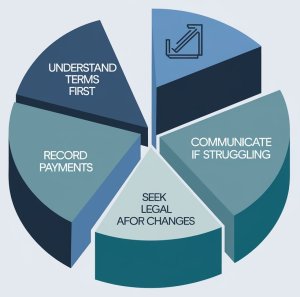 While some breaches arise due to unforeseen financial difficulties, others may result from misunderstandings about the terms of the consent order. To avoid breaching a financial consent order:
- Ensure you fully understand the order’s terms before agreeing to it.
- Keep clear records of all payments made and received.
- Communicate promptly with your ex-partner if you encounter financial difficulties.
- Seek legal advice if your circumstances change significantly, and consider applying for a variation of the order rather than ignoring its terms.
Summary
A financial consent order is legally binding once sealed by the court and breaching it can lead to serious legal consequences. These can range from enforcement proceedings to attachment of earnings, or even the sale of property in extreme cases. If you face a breach of the consent order, seek legal advice promptly to understand your options and act accordingly.
While enforcement options are available, it is always best to try resolving any issues amicably before taking legal steps. If that is not possible, the courts have the power to enforce the consent order and ensure compliance.